
Cultural responsiveness and care
The ways we understand ourselves are often shaped long before we fully realize it.
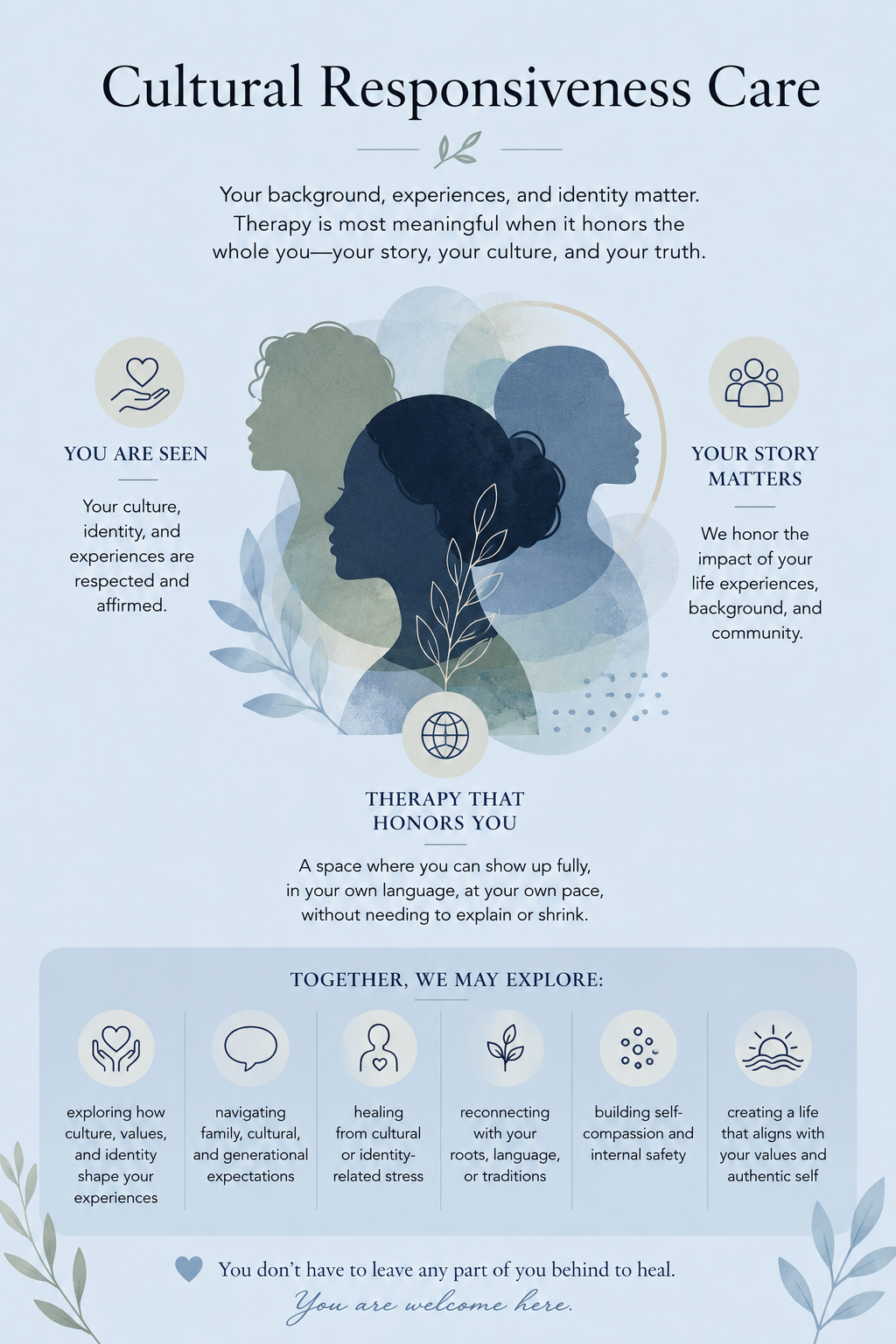
Culture, family roles, community, religion, generational experiences, language, and lived experiences can all influence the way we express emotions, build relationships, navigate boundaries, and move through the world. Sometimes these experiences create connection and resilience, while other times they can leave people feeling pressure to constantly adapt, perform, stay strong, or shrink parts of themselves to fit into different spaces.
Culturally responsive care recognizes that healing does not happen separately from identity or lived experience. Therapy can be a space where you do not have to explain away, minimize, or disconnect from important parts of who you are to feel understood.
My approach is grounded in curiosity, collaboration, and honoring the full context of each person’s experiences, relationships, values, and identity.
Therapy may involve exploring:
family and generational dynamics
cultural identity and self-understanding
pressure, responsibility, or perfectionism
navigating multiple environments or identities
people-pleasing and emotional suppression
boundaries, communication, and relationships
reconnecting with your values and authentic self
“People are never just individuals; they are always embedded in relationships, culture, and history.”